
01
Seasonal labour
Thinning, pruning and picking are concentrated into weeks and paid weekly. On many crops this is the largest single operating cost and it lands months before the fruit is paid for.
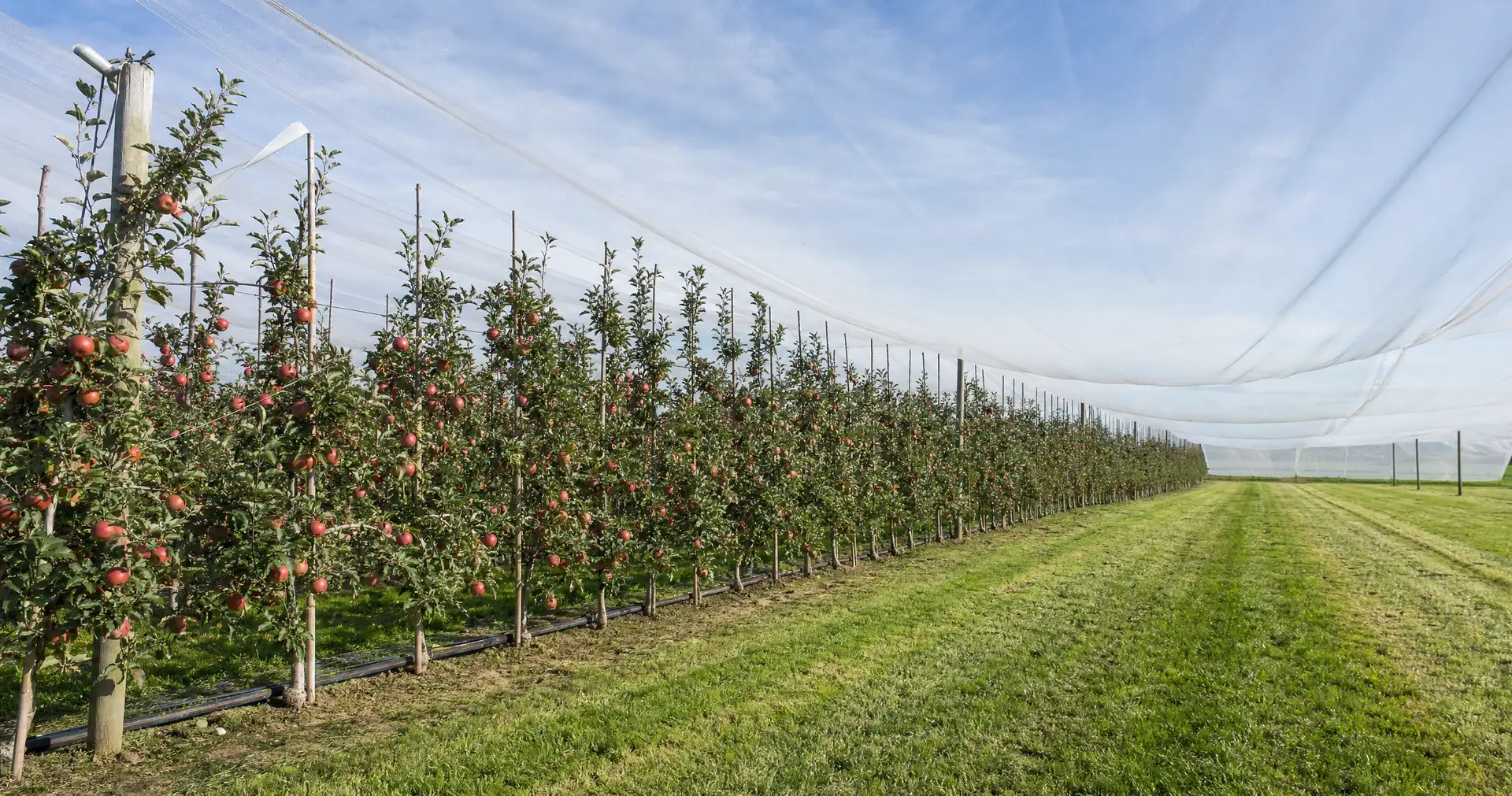
A new orchard is a development project with an operating business attached to the end of it, and the finance has to survive the gap between the two.
Last reviewed 8 September 2026
Indicative repayment
Weekly
$1,916/week
Indicative only. Not a quote or offer of credit. Actual rates, fees, and repayments depend on the business profile and the lender's decision.
Sending to Prospa
5 years at 9.00% . Prospa will ask a few quick questions, then provide a firm quote and funding if eligible.
Redirecting…
The short version
Two different problems
Establishing a block means land preparation, plants or vines, support structures, shelter, irrigation and several years of care before there is a commercial crop. During that period the business is spending steadily and earning nothing from the block, and the funding has to carry the whole of it.
Once producing, the annual pattern is its own problem. Pruning, thinning, crop protection and picking are concentrated into particular weeks, the labour cost of them is substantial, and the income arrives after the fruit has been picked, packed, stored and sold.
A grower is therefore running two funding structures at once for several years: a development facility carrying the establishment and a seasonal facility carrying the operating year. Conflating them is a common error, because the first should be long and the second should clear annually.
Establishment
Capital, no income
Ramp-up
Partial crops
Mature
Full production
Each year
Costs before receipts
Worked example
A $400,000 block development financed over five years at an indicative 9% costs roughly $8,300 a month. If the block produces its first partial crop in year three and a full one in year five, the first two years carry the full repayment against no income at all from that block.
That is about $200,000 of servicing to be found from elsewhere in the business before the development contributes anything. On a grower with existing mature blocks that is manageable; on a start-up it is the whole problem.
Financed over fifteen years, or folded into term debt secured on the land, the monthly cost falls substantially and the profile matches when the block actually produces. The total interest is higher and the business survives the establishment, which is the trade that matters on an asset with a productive life of decades.
Illustrative figures
Illustrative on stated assumptions and rounded. Establishment periods vary widely by crop. Not a quote or offer of credit.
The mismatch that causes trouble
This is the single most common structural error in horticultural finance, and it is entirely avoidable. Where the block produces nothing for three years and the facility repays over five, sixty percent of the repayment falls before there is any income from the asset. Folding development into long-term debt secured on the land, or arranging a facility with interest only through the establishment period, matches the cost to the benefit. Both are ordinarily available and both have to be asked for.
Where the operating money goes
01
Thinning, pruning and picking are concentrated into weeks and paid weekly. On many crops this is the largest single operating cost and it lands months before the fruit is paid for.
02
Applied through the growing season on a schedule that the weather can compress. Deferring it is not an option, which makes it an inflexible cash cost.
03
Frequently deducted from the return rather than invoiced, which makes it invisible in a cash-flow forecast built from expected gross returns.
04
On crops with plant variety rights, the licence is a real capital item and sometimes an ongoing charge, and it is part of what is being financed on a new block.
How the income arrives
Fruit leaving the orchard is not fruit paid for. Depending on the crop and the marketing arrangement, returns arrive in progress payments across the months after harvest, with a final settlement once the whole season has been sold and the costs of packing, storage and marketing have been deducted.
That means a grower’s seasonal facility does not clear at harvest. It clears progressively across the following months and finally at settlement, which extends the funded period well past the point the physical work has finished.
A cash-flow forecast built on gross returns at harvest is therefore wrong twice: the amount is before deductions and the timing is earlier than reality. Building it from the payment schedule and net returns instead is the difference between a facility that fits and one that runs out in the month after picking.
From a lender’s side
The honest position
The structure that works separates the development from the season. Long-term debt carries the establishment and is matched to the productive life of the block; a seasonal facility carries the operating year and clears as returns arrive. Neither should be doing the other’s job.
Where they are conflated, which happens when a development is funded on a seasonal limit or a season is funded by extending term debt, the business loses the signal each facility provides. A seasonal facility that no longer clears is telling a grower something, and it cannot do that if establishment costs are sitting inside it.
Getting that separation right at the outset costs nothing and is difficult to unpick later, which makes it the most valuable conversation to have with a lender before a development rather than after one.
Labour
Seasonal labour is the largest operating cost on most horticultural blocks and it is committed before the crop is known. Thinning and pruning happen months ahead of harvest, and picking happens against whatever crop actually set.
That produces an unusual exposure. A light crop reduces the picking cost proportionally and does not reduce the earlier work at all, so a poor season removes revenue while leaving a substantial part of the cost base intact.
It also makes labour availability a funding question rather than only an operational one. Where a crop cannot be picked in the window, it is worth less or nothing, and a facility sized against expected returns is exposed to something that has nothing to do with growing conditions.
The trade
When it goes wrong
Hail, wind or frost removes part or all of a crop after a full season of growing costs has been incurred.
What happens:A season funded and unpaid, with the establishment debt continuing regardless of whether the block produced.
A crop that cannot be picked in its window is worth materially less or nothing, and the window is measured in weeks.
What happens:Revenue lost for reasons unconnected to growing conditions, which is an exposure unique to labour-intensive crops.
Packing, storage and marketing costs are deducted from the return, and a budget built on gross figures overstates what actually arrives.
What happens:A seasonal facility that does not clear on a crop that appeared to perform, which is an accounting problem rather than an agricultural one.
The third is entirely avoidable and it is common. Building the cash-flow forecast from net returns and the actual payment schedule rather than from gross returns at harvest removes it.
Structures
A horticultural block is more than plantings. Shelter, support structures, netting, frost protection, irrigation and packing or coolstore facilities all form part of what makes it produce, and each has its own life and its own replacement cost.
They also form part of what a valuer assesses and what a lender is securing. A well-developed block with current infrastructure values above one where the structures are approaching replacement, and the difference is frequently substantial.
For a business planning ahead, that makes structure renewal a capital line rather than maintenance. Netting and frost protection in particular are expensive, they have finite lives, and a business that has not planned for replacing them is carrying a cost it has not named.
The development cost
The calculator runs the ordinary amortising arithmetic. A longer term than this shape allows is frequently the right structure for a block with a productive life of decades. Indicative only, and not a quote or offer of credit.
Indicative repayment
Weekly
$1,916/week
Indicative only. Not a quote or offer of credit. Actual rates, fees, and repayments depend on the business profile and the lender's decision.
Sending to Prospa
5 years at 9.00% . Prospa will ask a few quick questions, then provide a firm quote and funding if eligible.
Redirecting…
References
The agency publishing New Zealand horticultural production and outlook information, and responsible for biosecurity.
Context for New Zealand horticultural land use and production volumes.
The source for seasonal employment obligations, which drive the sector’s largest operating cost.
The source for freshwater and nutrient regulation affecting horticultural land use.
Context for New Zealand rural lending aggregates and rate movements.
FAQ
It varies widely by crop, and on most it is several years before a commercial crop and longer again before full production. The funding term should match that period rather than a standard business loan length.
A development term shorter than the establishment period, which puts most of the repayment into years with no income from the asset. Interest-only through establishment, or folding it into long-term debt, avoids it.
In progress payments across the months after harvest, with a final settlement once the season has been sold and packing, storage and marketing costs deducted. It is later and in more pieces than most forecasts assume.
Because they are built on gross returns at harvest. The amount is before deductions and the timing is earlier than reality, and both errors run in the same direction.
On most crops, seasonal labour. Thinning, pruning and picking are concentrated into weeks, paid weekly, and incurred months before the fruit is paid for.
Two facilities doing two jobs: long-term debt carrying the establishment and matched to the block’s productive life, and a seasonal facility carrying the operating year and clearing as returns arrive.
On crops with plant variety rights, a licence to grow the variety is a real capital item and sometimes an ongoing charge. It forms part of what is financed on a new block and part of what is valued on a sale.
A hail or wind event can remove a season’s crop while the costs of producing it have already been incurred, and the debt continues. It is the risk that most distinguishes horticulture from pastoral farming.
Materially. An incursion can affect a whole region rather than one grower, which is a correlated risk lenders are conscious of and which sits behind how the sector is assessed.
It is valued on what it can grow, the age and variety of the plantings, the structures and the water available, which makes a rural valuation on a producing block a more involved exercise than on bare land.
A development budget with the establishment period stated honestly, a payment schedule built from net returns rather than gross, and several years of production history where blocks already exist.
No. It describes a sector’s cash year in general terms. This site is not a lender, a broker or a registered financial adviser, and what suits a particular grower depends on facts a website cannot see.
Related
Irrigation finance
Frequently part of the same development.
Read onSeasonal finance
The facility carrying the operating year.
Read onViticulture
The same shape over a longer establishment.
Read onSeasonal cash flow by sector
Where horticulture sits against the others.
Read onAll seven sectors
Every production calendar compared in the same shape.
Read onDisclaimer
Farm debt is serviced out of a production year that does not arrive evenly, and it is commonly secured on the land and the stock the business depends on. Modelling the cost against the season before committing is what this site is built for. Borrowing at a level that stays comfortable through a poor season, rather than only through an average one, is widely regarded as the safer frame.
What this site is
A calculator and information tool. Not a lender, not a broker, not a registered financial adviser. Nothing here is personalised financial advice.
What the figures show
Modelled estimates based on the inputs shown. Not a quote. Not an offer of credit. Not a guarantee of approval, rate or fees.
What the lender decides
Final rates, fees, and approval are set by the lender after a CCCFA-appropriate assessment of the applicant's circumstances and credit decision.
Commercial disclosure
Farmfinance.org.nz earns a commission from Prospa when a visitor applies through this site and their application is approved. The commission is paid by Prospa, not by the borrower, and it does not influence the rate Prospa offers. Full disclosure on the partner page.
Tax, GST, and accountant framing
Tax-treatment statements (GST claim timing, interest deductibility, depreciation rates) are general in nature and subject to the accountant's confirmation on the specific business position. For material amounts, professional advice from a registered financial adviser or chartered accountant is widely regarded as the safer frame.