
01
Total commitments
Land, stock, seasonal and any existing plant debt, all serviced from the same production. This is the constraint far more often than the machine is.
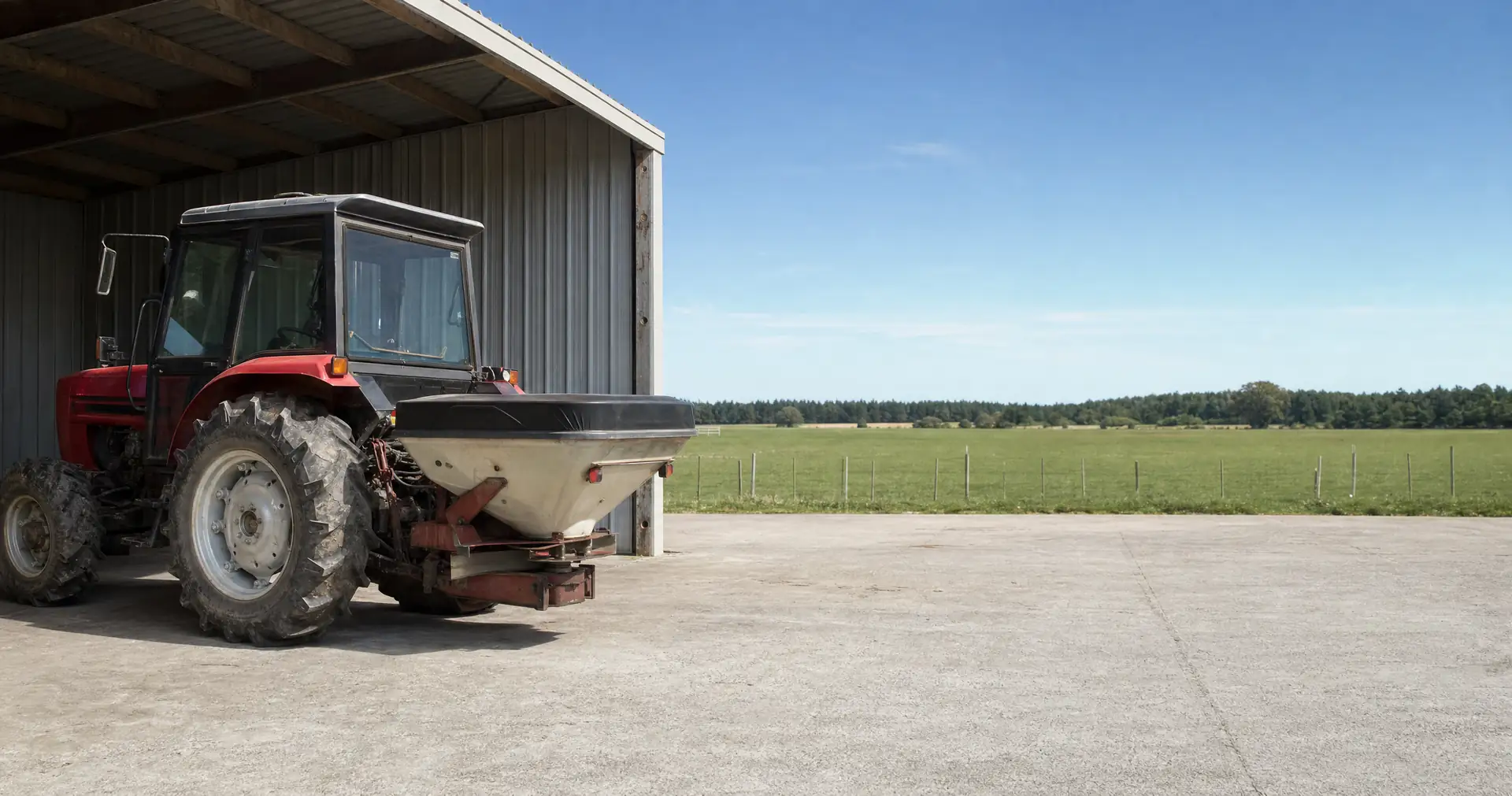
Machinery on a farm is financed like machinery anywhere else, and it sits in a balance sheet where land and stock are already competing for the same servicing capacity.
Last reviewed 8 September 2026
Indicative repayment
Weekly
$1,054/week
Indicative only. Not a quote or offer of credit. Actual rates, fees, and repayments depend on the business profile and the lender's decision.
Sending to Prospa
4 years at 10.00% . Prospa will ask a few quick questions, then provide a firm quote and funding if eligible.
Redirecting…
The short version
The position
A farm carrying a land mortgage, a livestock facility and a seasonal limit has three sets of obligations before any plant is financed, and every one of them is met from the same production. A machinery facility adds a fourth, and a lender assessing it is looking at the total rather than at the machine.
That is why a plant purchase that looks affordable in isolation can be declined, and why the answer differs between two farms with identical machines and identical production. The difference is what else is being serviced.
It also means the ordering matters. A farm that finances plant just before it needs to restructure its term debt, or just before a large stock purchase, has used capacity it may want. Sequencing capital decisions across a few years rather than taking them as they arise is worth more than negotiating any one of them.
Land debt
Largest and longest
Stock debt
Seasonal in value
Plant debt
Amortising, medium term
Serviced from
One production
Worked example
A machine costs $180,000 and is financed over four years at an indicative 10%, which is roughly $1,065 a week, or about $55,400 a year including interest. Running costs, maintenance, insurance and the labour to operate it add materially to that.
The same work contracted out is a known price per hectare or per hour, invoiced when the work is done and only when it is done. On a farm where the machine works three weeks a year, the contracting figure is frequently well below the annual cost of ownership even before the running costs are counted.
The arguments for owning are real and they are not primarily financial. Timeliness when the weather is against everyone, control over how the job is done, availability when contractors are booked out, and the option of contracting for others. Those are worth something and they are worth putting a number on, because the comparison is otherwise between a cost and a feeling.
Illustrative figures
Illustrative on stated assumptions and rounded. Not a quote or offer of credit.
The structure to ask for
A machinery facility repaid in equal monthly instalments is drawing on a farm every month including the ones with no income. Rural financiers will frequently structure repayments seasonally, with larger amounts after payout or harvest and smaller ones between, and the arrangement has to be asked for because an even schedule is the default. The total cost is broadly similar and the effect on the farm’s year is not, which makes it one of the better questions to ask at the quoting stage.
Own, contract or share
The right answer follows utilisation and timeliness rather than a general preference for owning.
| Feature | Own and finance | Contract | Share or syndicate |
|---|---|---|---|
| Cost when not used | The full facility | Nothing | A share of it |
| Timeliness in a difficult season | Best | Depends on availability | Negotiated |
| Capital or servicing required | Substantial | None | Shared |
| Control over the job | Complete | Limited | Shared |
| Suits | High utilisation | Low utilisation | Neighbours with aligned timing |
| Complication | Servicing capacity used | Booked out at the wrong moment | Agreements between the parties |
Sharing works where the timing genuinely differs between the parties and fails where everyone needs the machine in the same fortnight, which on neighbouring farms in one district is frequently the case.
What a financier assesses
01
Land, stock, seasonal and any existing plant debt, all serviced from the same production. This is the constraint far more often than the machine is.
02
Age, resale market and whether it carries a serial number. Mainstream plant with a deep second-hand market supports better terms than specialised equipment.
03
What the farm has produced across several seasons rather than one. Rural financiers read a run of years for the variation between them.
04
Whether an existing general security agreement is in place with the farm’s main lender, which has to be resolved before a plant financier can take the position it needs.
The boundary
The machine classes themselves, what a tractor of a given size costs, how a harvester holds value and what a used implement is worth, are a different subject and a large one. This page is about how plant debt behaves inside a farm’s balance sheet rather than about the machines.
The distinction matters because the two questions have different answers. Which machine to buy is a question about the job, the market and the resale position. Whether to finance it, on what structure and alongside what else, is a question about the farm.
A farm working through the first question is looking for equipment information. One working through the second is looking at its own servicing capacity, its seasonal cash shape and what else it intends to fund in the next three years, and this site is about the second.
The trade
The honest position
A machine used heavily across a season is straightforward to justify, and one used for a fortnight is straightforward to question. The uncomfortable middle is a machine used enough to feel necessary and not enough to pay for itself, which is where most of these decisions actually sit.
The useful discipline is to write down the hours or hectares the machine will do and the contracting price for the same work, before the finance conversation. That converts a preference into a comparison, and it frequently changes the answer.
It also changes the specification. A farm that has done the arithmetic frequently ends up buying a smaller or older machine and contracting the peak, which costs less on both sides and is a better outcome than the version where the arithmetic was never done.
End of term
Most machinery facilities end with the plant owned and nothing owed, which is straightforward. Where the arrangement carried a residual or a balloon, a lump sum falls due at the end and the options are settling it, refinancing it, or trading the machine against a replacement.
The position depends entirely on what the machine is worth relative to that figure. Where it is worth more, a trade clears the residual and contributes to the next deposit. Where it is worth less, the shortfall rolls into the next facility, which starts the following cycle already behind.
That is knowable months in advance from a dealer valuation, and it is the difference between planning a replacement and reacting to a due date. On a farm where the machine is needed for a specific window, discovering the position three weeks before the season is the version worth avoiding.
The trade
The process
Generalised rather than specific to any financier. This is the lightest of the rural applications.
01
What is being bought, its serial number, its age and who is selling it. On a used machine a register search against the serial number before any deposit is paid is the single highest-value check in the transaction.
Documents commonly required
02
Entity details, bank statements, financial statements where held, and a complete schedule of existing facilities. The total position rather than the machine is ordinarily the constraint.
Documents commonly required
03
Amount, term, deposit and whether repayments can be weighted toward the months income arrives. The last of those has to be asked for and is worth asking for.
04
Registration against the serial number, and where a general security agreement already exists with another lender, agreement between them before funds move.
Documents commonly required
The repayment
Machinery facilities amortise, so the output here is a repayment. Set it against the contracting price for the same work rather than against another lender. Indicative only, and not a quote or offer of credit.
Indicative repayment
Weekly
$1,054/week
Indicative only. Not a quote or offer of credit. Actual rates, fees, and repayments depend on the business profile and the lender's decision.
Sending to Prospa
4 years at 10.00% . Prospa will ask a few quick questions, then provide a firm quote and funding if eligible.
Redirecting…
References
The register on which security over farm plant is recorded, and where an existing interest is found.
The published source for the depreciation treatment of plant, which is a matter for the accountant.
Context for New Zealand farm production systems and contracting practice.
Context for New Zealand rural lending aggregates and rate movements.
Backs the distinction between general information of this kind and regulated financial advice.
FAQ
By a security interest over the plant, registered on the Personal Property Securities Register against the serial number. It is the simplest security position on a farm and it still has to be resolved with any existing general security holder.
Frequently yes, with larger amounts after payout or harvest and smaller ones between. It has to be asked for because an even schedule is the default, and the effect on a farm’s year is considerable.
Because land, stock, seasonal and plant obligations are all serviced from the same production. A financier assesses the total, which is why an affordable-looking purchase can be declined on a farm carrying other debt.
When utilisation is low. A machine used a few weeks a year frequently costs more to own than the contracting price for the same work, before running costs, and the comparison is arithmetic rather than preference.
Timeliness when weather compresses a window, control over how the job is done, availability when contractors are booked, and the option of contracting for others. They are real and they are worth putting a number on.
Where the timing genuinely differs between the parties, yes. It fails where everyone needs the machine in the same fortnight, which on neighbouring farms in one district is frequently the case, and any arrangement should be documented.
Commonly three to five years, with the ceiling set by how long the machine holds value rather than by its price at purchase. Older plant attracts shorter terms at the same price.
Plant used in a business is ordinarily depreciable, subject to the accountant’s confirmation of the category and the treatment of any private use. Inland Revenue publishes the applicable rates.
No, deliberately. Machine classes and what each costs are a different subject. This page is about how plant debt behaves inside a farm’s balance sheet rather than about the machines themselves.
A plant financier will want a first-ranking position over the machine, which requires agreement from the existing security holder. It is routine, it takes time, and raising it early avoids a delayed settlement.
Sequencing matters. A farm that finances plant just before restructuring term debt or making a large stock purchase has used capacity it may want, and planning capital decisions across a few years is worth more than negotiating any one of them.
No. It describes how a facility works in general terms. This site is not a lender, a broker or a registered financial adviser, and what suits a particular farming business depends on facts a website cannot see.
Related
Farm term loan
The debt plant finance competes with for servicing.
Read onIrrigation finance
The other capital item with a long payback.
Read onOn-farm tax and depreciation
The tax treatment of plant on a farm.
Read onHow NZ rural lending works
How total commitments are assessed.
Read onAll eight kinds of finance
Every rural facility compared in the same shape.
Read onDisclaimer
Farm debt is serviced out of a production year that does not arrive evenly, and it is commonly secured on the land and the stock the business depends on. Modelling the cost against the season before committing is what this site is built for. Borrowing at a level that stays comfortable through a poor season, rather than only through an average one, is widely regarded as the safer frame.
What this site is
A calculator and information tool. Not a lender, not a broker, not a registered financial adviser. Nothing here is personalised financial advice.
What the figures show
Modelled estimates based on the inputs shown. Not a quote. Not an offer of credit. Not a guarantee of approval, rate or fees.
What the lender decides
Final rates, fees, and approval are set by the lender after a CCCFA-appropriate assessment of the applicant's circumstances and credit decision.
Commercial disclosure
Farmfinance.org.nz earns a commission from Prospa when a visitor applies through this site and their application is approved. The commission is paid by Prospa, not by the borrower, and it does not influence the rate Prospa offers. Full disclosure on the partner page.
Tax, GST, and accountant framing
Tax-treatment statements (GST claim timing, interest deductibility, depreciation rates) are general in nature and subject to the accountant's confirmation on the specific business position. For material amounts, professional advice from a registered financial adviser or chartered accountant is widely regarded as the safer frame.