
01
It is liquid
An established saleyard and processing market means stock can be realised quickly at an observable price, which is a considerable advantage over most farm assets and supports the terms available.
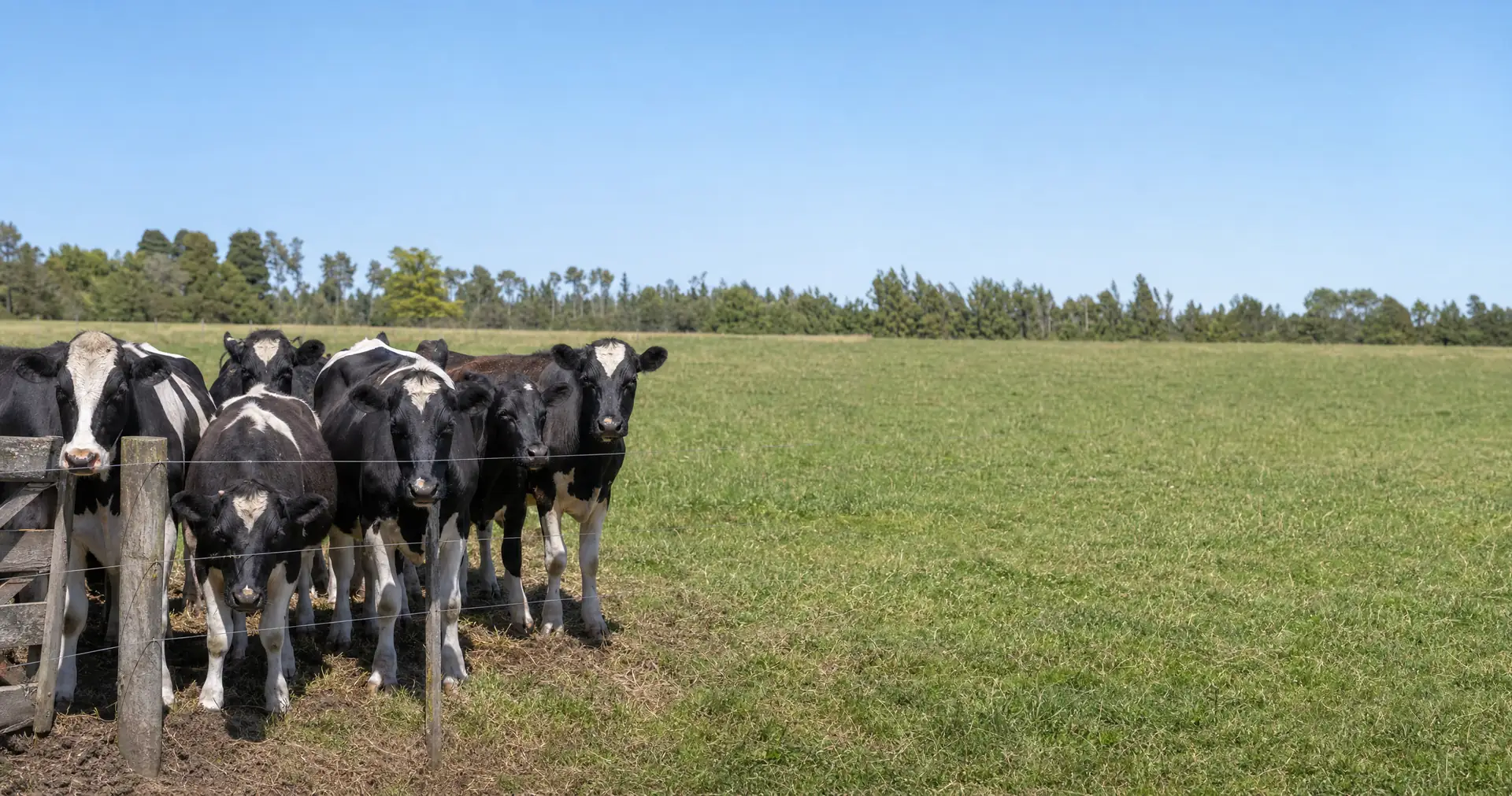
Livestock is the one form of security that appreciates while it is held, consumes feed to do so, and can be realised in a week. Financing it is unlike financing anything else on a farm.
Last reviewed 8 September 2026
Indicative repayment
Weekly
$2,662/week
Indicative only. Not a quote or offer of credit. Actual rates, fees, and repayments depend on the business profile and the lender's decision.
Sending to Prospa
2 years at 10.00% . Prospa will ask a few quick questions, then provide a firm quote and funding if eligible.
Redirecting…
The short version
The structures
A bank or rural lender facility secured over the livestock is the most common structure for a permanent herd. It sits alongside the land debt, ordinarily with the same lender, and is sized against the value of the stock with a margin.
Stock and station firms extend credit against purchases made through them, which is convenient at the point of sale and carries its own terms. It is frequently the fastest route and it is worth comparing on cost rather than accepting as the default because the agent arranged it.
Grazing agreements and leases are the alternatives that avoid the funding question entirely. Grazing moves the feed cost and the risk to another party for a period, and a lease provides use without ownership. Both change the tax position and both are worth pricing against the finance rather than treating as a different kind of decision.
Bank facility
Against the herd
Stock firm credit
From the agent
Grazing agreements
Someone else carries it
Lease arrangements
Use without ownership
Worked example
A farm buys $250,000 of stock to lift production, funded over two years at an indicative 10%. The repayment is roughly $2,660 a week, and the total repaid is about $276,600.
Against that sits what the additional animals produce, which is the only figure that makes the decision. Where the increase adds production worth materially more than $26,600 over the two years, after the feed, animal health and labour required to carry it, the arrangement works.
The trap is counting the revenue and not the carrying cost. Additional stock consumes feed the farm either grows, buys or grazes elsewhere, and on a system already at capacity that cost can be most of what the increase produces. The honest calculation includes it.
Illustrative figures
Illustrative on stated assumptions and rounded. Not a quote or offer of credit.
How a lender sees it
01
An established saleyard and processing market means stock can be realised quickly at an observable price, which is a considerable advantage over most farm assets and supports the terms available.
02
Animals can be shifted, traded and sold, which makes identification and control harder than for a machine with a serial number. Security arrangements and reporting reflect that.
03
A drought or a price collapse reduces the value of the security and the farm’s ability to service the debt simultaneously, which is the opposite of what a lender wants from security.
04
Young stock grows into value while older stock declines, so the security position changes with the class composition of the herd rather than only with the market.
The correlated risk
On most secured lending, the value of the security and the borrower’s ability to pay are only loosely connected. On livestock they move together: a drought reduces condition, forces earlier sale into a falling market and cuts production, so the debt becomes harder to service in the same months the security becomes worth less. That is a structural feature rather than a criticism of the product, and it is the reason a livestock facility should be sized against a poor season rather than an average one.
The tax position
New Zealand tax rules provide specific valuation options for livestock, and the option a farm uses affects the taxable position in the year of purchase, the year of sale and every year in between. Changing between options is itself a decision with consequences, subject to the accountant’s confirmation of what applies to a particular business.
That matters for finance because it changes what a herd increase actually costs after tax, and because a large stock purchase or sale can produce a taxable effect that lands in the same year as the transaction. A purchase that looks affordable on cash can be less comfortable once the tax position is included.
It is also central to succession and to any sale of a farming business, because the livestock component frequently produces the largest single tax consequence in the transaction. None of that is answerable on a website, and all of it is answerable by an accountant before the decision rather than after.
Own, graze or lease
These are ordinarily compared on capital rather than on total cost, which is the wrong basis.
| Feature | Buy and finance | Graze for someone else | Lease |
|---|---|---|---|
| Capital required | Substantial | None | Little |
| Who carries market risk | The farm | The owner | The owner, ordinarily |
| Upside if values rise | The farm | None | Limited |
| Feed cost | The farm | The farm, and it is paid for it | The farm |
| Tax position | Livestock regime applies | Grazing income | Lease payments |
| Suits | A permanent system | Spare feed and no capital | Trying a class or a season |
Grazing is the option most often overlooked by farms with feed and no capital, and it converts a funding problem into an income line. What it gives up is the appreciation, which on a rising market is exactly what the capital would have earned.
The trade
The honest position
Every stock purchase decision reduces to whether the animals produce more than they cost to own and carry. The finance cost is the visible part of that and frequently the smaller part, because feed, animal health, labour and the pasture that could have carried something else all sit alongside it.
On a system with genuine surplus feed, additional stock is close to free to carry and the arithmetic is straightforward. On a system already at capacity, the same purchase requires bought feed or grazing elsewhere, and the calculation changes completely.
That is why the useful question before financing stock is not what the finance costs but whether the farm has the feed. A purchase that requires the feed to be bought is a different proposition from one that uses feed already grown, and the finance is identical in both cases.
Records
A lender securing livestock is securing something that walks, gets traded and changes in value. What makes that workable is documentation: animal identification and tracing records, stock reconciliations, class and age breakdowns, and a count that reconciles to the accounts.
A business with those in order can demonstrate what it holds and what it is worth at any point, which supports both the initial facility and the annual review. One relying on an approximate number in the owner’s head is asking a lender to take considerably more on trust, and the terms reflect it.
The same records serve the tax position, the insurance position and any sale or succession. Keeping them properly is one of the few pieces of farm administration that pays in four different directions, and it is frequently the weakest part of an otherwise well-run business.
Trading systems
A finishing or trading operation buys stock, grows it and sells it repeatedly, which makes livestock finance a continuous facility rather than a one-off purchase. The working capital requirement is set by the largest position the business intends to hold at once rather than by any single transaction.
That is a different funding conversation. A trading business needs a limit sized against its peak holding, available every cycle, and it needs the flexibility to buy when the market is right rather than when the last line has cleared.
It also carries a different risk. A breeding operation holding a standing herd is exposed to production and price gradually. A trading operation is exposed at the moment it buys and again at the moment it sells, and a market that moves between the two takes the margin regardless of how the animals performed.
The repayment
Livestock facilities ordinarily amortise, so the output here is a repayment. The carrying cost of the animals sits alongside it and is frequently larger. Indicative only, and not a quote or offer of credit.
Indicative repayment
Weekly
$2,662/week
Indicative only. Not a quote or offer of credit. Actual rates, fees, and repayments depend on the business profile and the lender's decision.
Sending to Prospa
2 years at 10.00% . Prospa will ask a few quick questions, then provide a firm quote and funding if eligible.
Redirecting…
References
The published source for the livestock valuation regimes referred to in the tax section.
The register on which security over livestock is recorded.
The agency responsible for animal identification and tracing requirements affecting stock ownership records.
Context for New Zealand livestock numbers and sector production.
Referenced for the point that livestock valuation elections belong with a chartered accountant.
FAQ
By a security interest over the animals, registered on the Personal Property Securities Register, ordinarily alongside a general security agreement over the business. Animal identification and tracing records support the arrangement.
Because it is liquid, it changes in value as animals grow, and its value is correlated with the season. A machine is worth roughly the same in a drought; a herd is not, and the farm’s ability to service is affected at the same time.
The finance plus the carrying cost, which is feed, animal health, labour and the pasture that could have carried something else. On a system at capacity the carrying cost frequently exceeds the finance cost.
It is convenient at the point of sale and it has its own terms. Worth comparing against a bank facility on total cost rather than accepting as the default because the agent arranged it.
New Zealand tax rules provide specific valuation options for livestock, and the option used affects the position in the year of purchase, the year of sale and every year between, subject to the accountant’s confirmation.
It can, and materially, depending on the valuation regime and the circumstances. That is a question for the accountant before the sale rather than after, particularly in a succession or a farm sale.
For a farm with feed and no capital, yes, and it converts a funding problem into an income line. What it gives up is the appreciation, which on a rising market is exactly what the capital would have earned.
Condition falls, stock is sold earlier into a market other people are also selling into, and production drops. The security and the servicing capacity weaken together, which is why a facility should be sized against a poor season.
Frequently, and it is the lower-risk approach. Staged purchases spread the funding, let the system prove it can carry the additional stock, and avoid committing to a class or a market at a single point.
Yes. Livestock debt competes with land and plant for the same servicing capacity, and any lender assessing a new facility looks at total commitments rather than at the new one alone.
On class, condition and current market values, with a margin. Valuations move with the market, so a facility sized at a market peak can look different a season later, which lenders build into the advance rate.
No. It describes how a facility works in general terms. This site is not a lender or a chartered accountant, and the livestock tax position in particular is a question for the business’s accountant.
Related
Livestock valuation and finance
The valuation and tax detail in full.
Read onSeasonal finance
What funds the feed the stock consumes.
Read onSheep and beef
Where stock trading is the business rather than an input.
Read onOn-farm tax and depreciation
The wider tax position around a farm’s assets.
Read onAll eight kinds of finance
Every rural facility compared in the same shape.
Read onDisclaimer
Farm debt is serviced out of a production year that does not arrive evenly, and it is commonly secured on the land and the stock the business depends on. Modelling the cost against the season before committing is what this site is built for. Borrowing at a level that stays comfortable through a poor season, rather than only through an average one, is widely regarded as the safer frame.
What this site is
A calculator and information tool. Not a lender, not a broker, not a registered financial adviser. Nothing here is personalised financial advice.
What the figures show
Modelled estimates based on the inputs shown. Not a quote. Not an offer of credit. Not a guarantee of approval, rate or fees.
What the lender decides
Final rates, fees, and approval are set by the lender after a CCCFA-appropriate assessment of the applicant's circumstances and credit decision.
Commercial disclosure
Farmfinance.org.nz earns a commission from Prospa when a visitor applies through this site and their application is approved. The commission is paid by Prospa, not by the borrower, and it does not influence the rate Prospa offers. Full disclosure on the partner page.
Tax, GST, and accountant framing
Tax-treatment statements (GST claim timing, interest deductibility, depreciation rates) are general in nature and subject to the accountant's confirmation on the specific business position. For material amounts, professional advice from a registered financial adviser or chartered accountant is widely regarded as the safer frame.