
01
Seed and establishment
Incurred at the front of the season in a single large block. On contracted crops the seed is sometimes supplied, which changes the cash shape considerably.
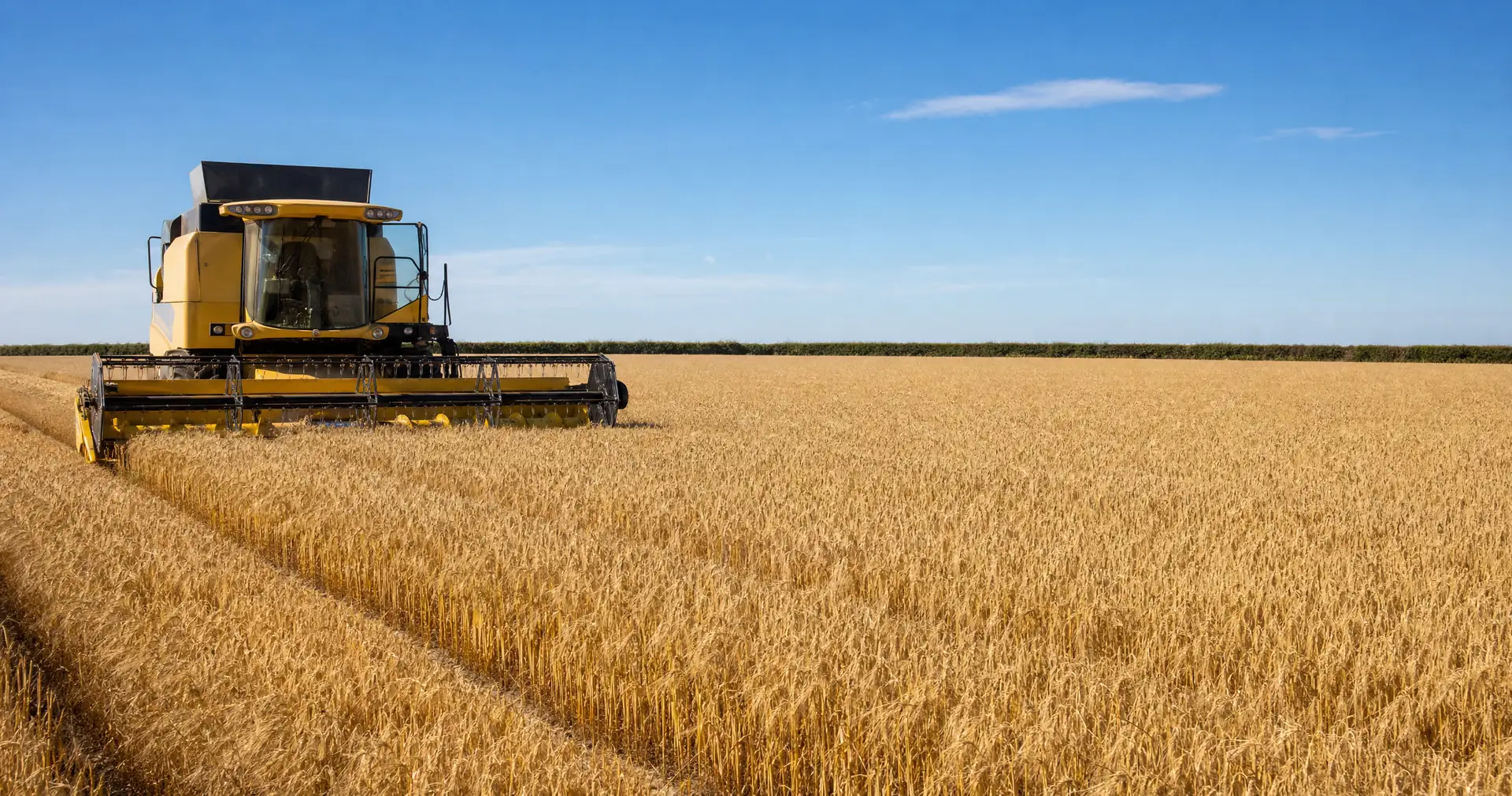
Arable spends on seed, fertiliser, chemical, fuel and machinery through an entire growing season and sells at the end of it, which produces the deepest single drawdown in New Zealand farming.
Last reviewed 8 September 2026
Indicative interest cost
Weekly
$365/week
Indicative only. Not a quote or offer of credit. Actual rates, fees, and repayments depend on the business profile and the lender's decision.
Sending to Prospa
$190,000 drawn at 10.00% . Prospa will ask a few quick questions, then provide a firm quote and funding if eligible.
Redirecting…
The short version
The cash year
The season begins with cultivation, seed and base fertiliser, which is a substantial cash cost incurred before anything is growing. Through the season, crop protection, side dressings, irrigation and fuel accumulate steadily.
Harvest is the largest single operational event and it is either a machinery cost the business already carries or a contracting invoice payable shortly afterwards. Either way it lands before the crop has been sold.
The income arrives after harvest, and depending on the crop and the arrangement, it can arrive weeks or months later again. That produces the deepest per-hectare seasonal facility in New Zealand farming and the sharpest clearance once payment lands.
Cultivation and sowing
Seed, fertiliser, fuel
Growing
Chemical, irrigation, fuel
Harvest
Machinery or contractors
After
The crop is sold
Worked example
A cropping business runs a $350,000 seasonal facility. Drawing begins with cultivation and seed, accumulates steadily through the growing season, and peaks at around $300,000 immediately after harvest costs have been met and before the crop is paid for.
The average drawn balance across the year is around $190,000, and at an indicative 10% the interest cost is roughly $19,000. That is an ordinary operating cost for the sector rather than a sign of difficulty.
The peak figure is the one that matters for sizing. A facility set at $250,000 against that pattern runs out in the weeks between harvest and payment, which is the single worst moment in the cropping year to be short, because the crop is in the shed and the invoices are due.
Illustrative figures
Illustrative on stated assumptions and rounded. Not a projection for any particular farm.
The first decision
This changes the risk profile more than any other decision in the sector, and lenders read the two very differently.
| Feature | Contracted | Open market |
|---|---|---|
| Price known before sowing | Yes | No |
| Remaining risk | Yield and quality | Yield, quality and price |
| Upside if prices rise | Forgone | Captured |
| Fundability | Stronger | Weaker |
| Obligation if yield falls short | May have to buy in | None |
| Suits | A business funding the season on debt | A business with reserves |
The last row is the practical point. A business funding its whole season on a facility has less capacity to carry price risk than one operating on reserves, and contracting a proportion is the ordinary compromise.
The machinery question
A harvester is among the most costly machines on any New Zealand farm and it works for a small part of the year. Owning it buys timeliness in a season where the weather compresses the window and everyone wants the same fortnight, which is genuinely valuable and is not free. The comparison against contracting is arithmetic: the annual cost of ownership including running and maintenance, against the contracting price for the hectares actually harvested. That calculation is worth doing before the finance conversation rather than after it.
Where the money goes
01
Incurred at the front of the season in a single large block. On contracted crops the seed is sometimes supplied, which changes the cash shape considerably.
02
Applied across the season on a schedule the weather can compress. Deferring is not a real option, which makes it an inflexible cash cost.
03
Continuous through the growing period, and materially larger where the system is irrigated. Both are exposed to prices outside the farm’s control.
04
Machinery finance or contracting, plus cartage and drying where required. The largest single operational event and the last cost before income.
From a lender’s side
The honest position
Arable is the sector where the difference between the peak and the average drawdown is largest, and where sizing on the wrong one causes the most trouble. The peak occurs after harvest costs and before payment, which is a period of a few weeks in which the whole season’s spending is outstanding at once.
A facility sized on the average leaves a business short at exactly that point, and it is the point at which nothing can be done: the crop is harvested, the contractors are invoicing and the buyer pays when the buyer pays.
The remedy is arithmetic rather than negotiation. The peak from the last three seasons is in the statements, and a facility sized against the worst of them with a margin is the request worth making, at a point in the year when the business is not asking for it urgently.
Storage
On-farm storage lets a business sell after harvest rather than into it, which on some crops and in some years is worth a meaningful margin. It also extends the funded period, because the facility that carried the season is still drawn while the grain sits.
That is a straightforward calculation with two sides. The expected improvement in price against the interest on carrying the facility for the additional months, plus drying, storage and any quality risk from holding.
It is also a capital question, because storage has to be built or hired before it can be used. A silo is a long-lived asset financed accordingly, and a business considering one should price it against several years of the marketing benefit rather than against one good year.
The trade
When it goes wrong
All three leave the costs incurred and the revenue reduced or absent, which is the shape of every difficult year in the sector.
Establishment failure, a wet harvest or a hail event takes part or all of a crop after the inputs, the labour and the growing costs have been spent.
What happens:A season funded and unpaid, with the facility at or near its peak and no receipt to clear it.
The crop is harvested and does not meet the specification it was grown for, so it is sold into a lower-value market or rejected against a contract.
What happens:Revenue well below budget, and on a contracted crop potentially an obligation to source the shortfall.
The crop is sold and the payment arrives later than assumed, extending the drawdown past the point the limit was sized for.
What happens:An excess or an urgent limit conversation on a business that has actually performed as planned.
The third is the most avoidable. Payment terms and timing are known before the crop is sold, and building them into the facility sizing rather than assuming payment at harvest removes the problem entirely.
Rotation
A cropping rotation spreads risk across crops with different diseases, different markets and different weather sensitivities within one season. A business growing three crops has three price exposures rather than one, and a poor result in one is frequently offset.
It also affects the land itself. A rotation that maintains soil structure and manages disease pressure is protecting the productive capacity the security rests on, and one that does not is drawing on it. Lenders with rural experience read that in the cropping history.
The practical point for an application is that presenting the rotation rather than only the coming crop shows the system rather than a year. A business that can describe how the land is being managed across four seasons is describing something more durable than a single budget.
The cost of the season
A seasonal facility charges on what is drawn, so this shows the interest cost of an average drawn balance across the year rather than a repayment. Indicative only, and not a quote or offer of credit.
Indicative interest cost
Weekly
$365/week
Indicative only. Not a quote or offer of credit. Actual rates, fees, and repayments depend on the business profile and the lender's decision.
Sending to Prospa
$190,000 drawn at 10.00% . Prospa will ask a few quick questions, then provide a firm quote and funding if eligible.
Redirecting…
References
The agency publishing New Zealand arable production and outlook information.
Context for New Zealand arable land use, crop areas and yields.
The source for freshwater and nutrient regulation affecting cropping systems.
Context for New Zealand rural lending aggregates and rate movements.
Backs the distinction between general information of this kind and regulated financial advice.
FAQ
Because a whole season of inputs is spent before anything is sold, with nothing arriving in between. That produces the deepest per-hectare drawdown in New Zealand farming and the sharpest clearance afterwards.
After harvest costs have been met and before the crop is paid for. That is a short window in which the entire season’s spending is outstanding at once, and it is the figure the limit must accommodate.
The peak, taken from the worst of the last three seasons with a margin. Sizing on the average leaves the business short at exactly the point where nothing can be done about it.
Materially. A contracted price removes the market question and leaves yield and quality, which is a considerably stronger position for a lender than an open-market crop with all three risks outstanding.
The upside is forgone if prices rise, and on some arrangements a shortfall in yield can create an obligation to buy in. Contracting a proportion rather than the whole crop is the ordinary compromise.
It depends on hectares and on how much timeliness is worth. The annual cost of ownership including running and maintenance, against the contracting price for the hectares actually harvested, is the comparison and it is worth doing before the finance conversation.
The season’s costs have been incurred and the revenue does not arrive. That is the sector’s defining exposure and it is the reason a facility needs tolerance beyond the expected peak.
Fertiliser and fuel are substantial, they move independently of anything the farm controls, and they are committed early in the season. A price move after sowing cannot be avoided by changing the plan.
It raises the operating cost and reduces the yield variability, which cuts both ways. A lender ordinarily views reliable water positively because it makes the production case more predictable.
Yes. A rotation across several crops spreads price and disease risk within a season, and a business relying on a single crop is a more concentrated position than one growing three.
The seasonal peak from the last three years, the contracted proportion of the coming crop, the machinery position, and a budget built on conservative yields rather than good ones.
No. It describes a sector’s cash year in general terms. This site is not a lender, a broker or a registered financial adviser, and what suits a particular farm depends on facts a website cannot see.
Related
Seasonal finance
The facility that carries the whole season.
Read onFarm machinery finance
The other large decision in the sector.
Read onIrrigation finance
Where reliability changes the production case.
Read onSeasonal cash flow by sector
Where arable sits against the others.
Read onAll seven sectors
Every production calendar compared in the same shape.
Read onDisclaimer
Farm debt is serviced out of a production year that does not arrive evenly, and it is commonly secured on the land and the stock the business depends on. Modelling the cost against the season before committing is what this site is built for. Borrowing at a level that stays comfortable through a poor season, rather than only through an average one, is widely regarded as the safer frame.
What this site is
A calculator and information tool. Not a lender, not a broker, not a registered financial adviser. Nothing here is personalised financial advice.
What the figures show
Modelled estimates based on the inputs shown. Not a quote. Not an offer of credit. Not a guarantee of approval, rate or fees.
What the lender decides
Final rates, fees, and approval are set by the lender after a CCCFA-appropriate assessment of the applicant's circumstances and credit decision.
Commercial disclosure
Farmfinance.org.nz earns a commission from Prospa when a visitor applies through this site and their application is approved. The commission is paid by Prospa, not by the borrower, and it does not influence the rate Prospa offers. Full disclosure on the partner page.
Tax, GST, and accountant framing
Tax-treatment statements (GST claim timing, interest deductibility, depreciation rates) are general in nature and subject to the accountant's confirmation on the specific business position. For material amounts, professional advice from a registered financial adviser or chartered accountant is widely regarded as the safer frame.