
01
The land and the equity in it
Because there is no production to assess for most of the rotation, the property and how much of it the business owns outright carry the decision.
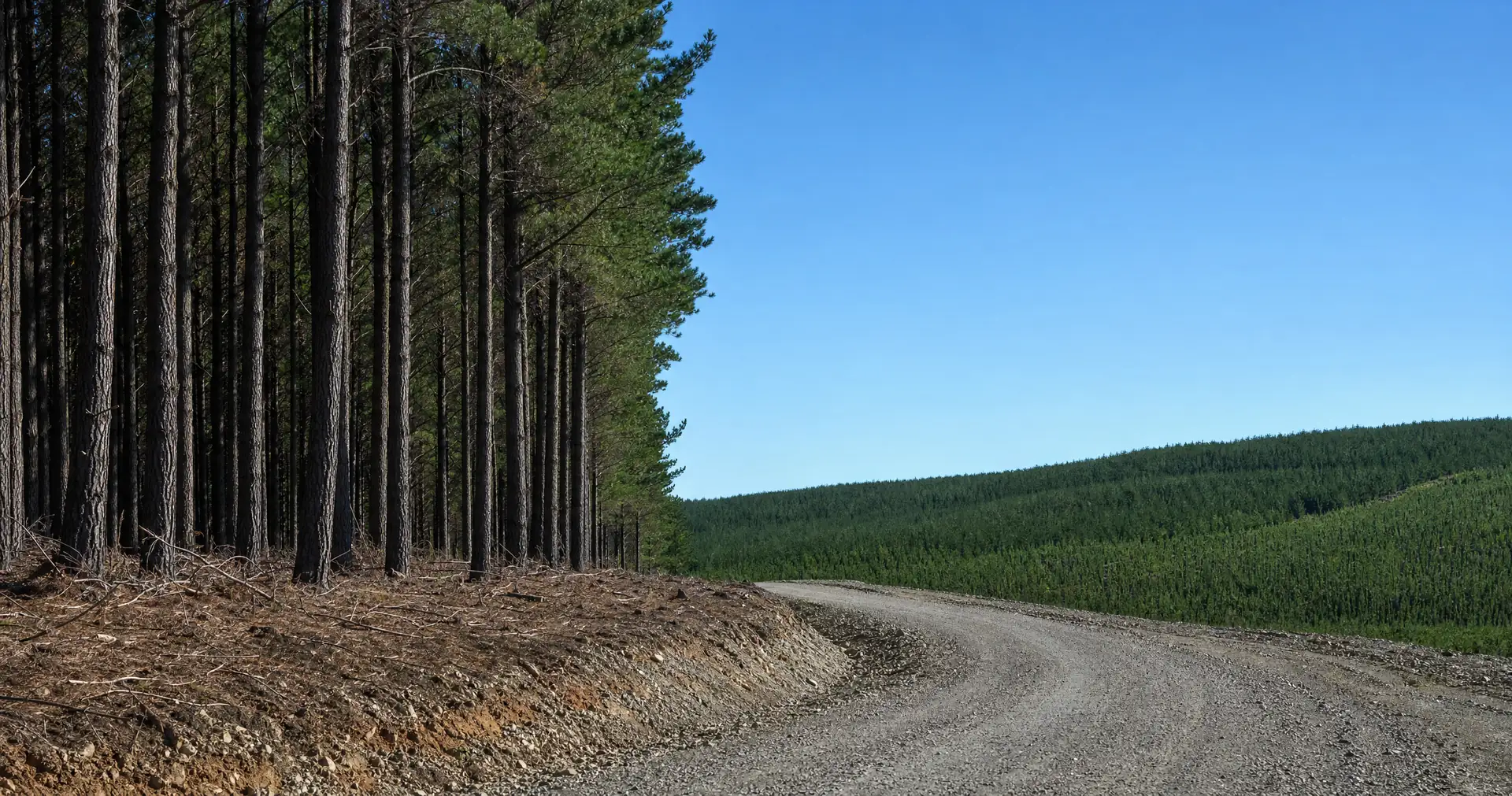
Forestry has the longest cash cycle in New Zealand primary production, and almost nothing about ordinary farm finance is shaped for a crop that takes decades.
Last reviewed 8 September 2026
Indicative repayment
Weekly
$1,916/week
Indicative only. Not a quote or offer of credit. Actual rates, fees, and repayments depend on the business profile and the lender's decision.
Sending to Prospa
5 years at 9.00% . Prospa will ask a few quick questions, then provide a firm quote and funding if eligible.
Redirecting…
The short version
The rotation
The front of the rotation carries the cost. Land preparation, seedlings and planting are followed by releasing, and on regimes that require it by thinning and pruning through the first years. That is a concentrated period of spending on an asset that will produce nothing for a long time.
Through the middle of the rotation the cash requirement is low: rates, insurance, management and the occasional operation. Low is not nothing, and on a business with no other income it still has to come from somewhere.
Harvest is one event, and it produces the entire return on decades of holding. The costs of it, harvesting, roading, cartage and port charges, are substantial and are incurred against a log price and an exchange rate on the day rather than an average across the rotation.
Year 0
Land preparation and planting
Early years
Releasing, thinning, pruning
Middle years
Rates, insurance, management
Harvest
The single receipt
Why the usual facilities do not fit
A seasonal facility exists to be drawn and repaid within a year. A forestry block has no annual income to repay against for most of its life, so a facility structured that way simply accumulates. Funding forestry means funding against the land and the equity in it, from other income, or from an arrangement structured for the rotation. Trying to carry a forestry block on an operating facility is the most common structural error in the sector and it does not become visible for years.
Worked example
A $400,000 establishment financed over five years at an indicative 9% costs roughly $8,300 a month. Across those five years the block produces nothing at all in a conventional production sense, so that servicing comes entirely from elsewhere in the business.
That is around $500,000 of servicing before the asset contributes anything, which for a business with other farming income is a manageable structure and for one without it is not.
Registered carbon changes this materially, because units generated during the rotation can be sold to produce income while the trees grow. It also creates a liability if the forest is harvested or the land use changes, which means the income and the obligation have to be understood together rather than as a windfall.
Illustrative figures
Illustrative on stated assumptions and rounded. Rotation lengths and carbon treatment vary. Not a quote or offer of credit.
Carbon
Forest registered in the New Zealand Emissions Trading Scheme can earn units as the trees grow, and those units can be sold. That converts a crop with no income for decades into one with a revenue stream during the rotation, which changes the funding conversation completely.
It also creates a liability. Units earned have to be surrendered when the carbon stock falls, which happens at harvest or if the land use changes, and a business that has sold units and spent the proceeds has an obligation to meet at the point the forest is cut.
The rules governing registration, averaging, permanent forestry and surrender obligations are detailed and they have changed over time. This site does not restate them, because a paraphrase of a scheme that moves is worse than none, and the Ministry for Primary Industries publishes the current position.
What a lender looks at
01
Because there is no production to assess for most of the rotation, the property and how much of it the business owns outright carry the decision.
02
Whether the business has other farming or off-farm income to service the debt during the rotation. On a pure forestry position without that, the structure has to be different.
03
Age, species, regime, growth and access. A stand approaching harvest is a very different security from one recently planted, and valuation reflects that.
04
Whether the forest is registered, what units have been earned and sold, and what surrender obligation exists. That obligation is a liability that travels with the position.
From a lender’s side
The honest position
Financially, a forestry block behaves far more like a long-term land holding than like a farm. The debt is against the land, the return arrives once, and the years between are about holding costs rather than about production. Understanding it that way produces better structures than treating it as farming with an unusual season.
For a mixed business, forestry on marginal country alongside a pastoral operation is straightforward, because the pastoral income services the debt and the block is a long-dated asset. That is the common New Zealand pattern and it works.
For a business whose only asset is the forest, the funding question is genuinely harder and the answers are equity, carbon income or an arrangement structured for the rotation rather than a conventional facility. Approaching it as a conventional farm application is the mistake, and it is made regularly.
Insurance
A forestry block is exposed to fire, wind and disease for the whole of its rotation, and unlike an annual crop there is no chance to recover the following year. A stand lost at year twenty is twenty years of holding costs with nothing at the end.
Insurance is available and it is a real annual cost across a long period, which makes the decision about how much to carry a genuine one rather than a formality. A lender with security over a block will ordinarily have a view about it, and that view is worth establishing at the outset.
The other mitigation is diversification across age classes and locations, which larger holdings can do and a single block cannot. That is one of the reasons forestry investment is frequently structured across several properties or through a syndicate rather than as one stand.
The trade
Structuring it
01
The common pattern. Blocks planted on country that suits them, funded within the farm’s land debt and serviced from pastoral income while they mature. Lenders understand this well and it is the easiest of the three to arrange.
02
A holding funded largely from equity, with registered carbon providing revenue during the rotation. The surrender obligation makes that income partly a liability, and understanding both halves before selling units is the discipline this route requires.
03
Several investors holding a rotation together, which spreads the exposure across age classes and locations and provides scale that a single block cannot. The arrangements between the parties matter as much as the forestry, and both need documenting properly.
Harvest planning
Harvest is one event and several decisions. When to cut, given log prices and shipping costs at that moment. Whether roading and access are adequate or need work first. Which contractor, and whether they are available in the window that suits the market rather than the one that suits their schedule.
Those decisions are worth more than most of what happened during the rotation, because the whole return is settled by them. A block harvested into a weak market or delayed by access work that should have been done earlier produces less than an identical block harvested well.
It also means the years before harvest are not idle. Roading, access and the planning of the harvest itself are worth attention several seasons ahead, and a lender with security over a maturing block will ordinarily be interested in whether that planning exists.
The establishment cost
The calculator runs the ordinary amortising arithmetic on an establishment cost. A forestry rotation is considerably longer than any term this shape models. Indicative only, and not a quote or offer of credit.
Indicative repayment
Weekly
$1,916/week
Indicative only. Not a quote or offer of credit. Actual rates, fees, and repayments depend on the business profile and the lender's decision.
Sending to Prospa
5 years at 9.00% . Prospa will ask a few quick questions, then provide a firm quote and funding if eligible.
Redirecting…
References
The agency responsible for New Zealand forestry policy and for the forestry provisions of the Emissions Trading Scheme.
The source for the current rules on registration, averaging and surrender obligations.
Context for New Zealand forestry land area, harvest volumes and export values.
The authority for title and for the overseas investment regime affecting some forestry land purchases.
Context for New Zealand rural lending aggregates and rate movements.
FAQ
Because a seasonal facility exists to be drawn and repaid within a year, and a forestry block has no annual income for most of its rotation. A facility structured that way accumulates rather than clearing.
The land, and increasingly the standing crop as it approaches harvest. Because there is no production to assess for most of the rotation, the property and the equity in it carry the lending decision.
Registered forest can earn units during the rotation, which converts a crop with no income for decades into one with a revenue stream. It also creates a surrender obligation when the carbon stock falls.
No. Units earned have to be surrendered when the forest is harvested or the land use changes, so a business that has sold units and spent the proceeds carries an obligation to the point of harvest.
Concentrated at the front, in land preparation, planting, releasing and any thinning or pruning the regime requires. Through the middle years the requirement is low but not nil, covering rates, insurance and management.
Log prices, shipping costs and exchange rates in the harvest window, together with the harvesting, roading and cartage costs. Decades of holding are settled on conditions at one moment.
Very differently. A stand approaching harvest is a substantial and realisable asset; a recently planted one is a cost that has been incurred with a long wait attached, and the valuation reflects that.
It is the common New Zealand pattern, and it works because pastoral income services the debt while the block matures on country that suits it. That is a considerably easier funding position than a pure forestry holding.
Fire, wind and disease across decades, alongside the price and exchange rate exposure at harvest. Insurance covers some of it and the length of the exposure is what distinguishes the sector.
Because they are detailed and they have changed over time, and a paraphrase of a scheme that moves is worse than none. The Ministry for Primary Industries publishes the current position and it is linked in the sources.
Increasingly, particularly as it approaches harvest, and it is more complex than land security. How a lender treats a standing crop varies considerably and is worth establishing early rather than assuming.
No. It describes a sector’s cash cycle in general terms. This site is not a lender, a broker or a registered financial adviser, and carbon and forestry regulation questions belong with a specialist.
Related
Farm term loan
The land facility forestry debt ordinarily sits within.
Read onRural property finance
Buying forestry land, and what a lender assesses.
Read onMPI grants and co-investment
Public funding available to forestry projects.
Read onSheep and beef
The system forestry most often sits alongside.
Read onAll seven sectors
Every production calendar compared in the same shape.
Read onDisclaimer
Farm debt is serviced out of a production year that does not arrive evenly, and it is commonly secured on the land and the stock the business depends on. Modelling the cost against the season before committing is what this site is built for. Borrowing at a level that stays comfortable through a poor season, rather than only through an average one, is widely regarded as the safer frame.
What this site is
A calculator and information tool. Not a lender, not a broker, not a registered financial adviser. Nothing here is personalised financial advice.
What the figures show
Modelled estimates based on the inputs shown. Not a quote. Not an offer of credit. Not a guarantee of approval, rate or fees.
What the lender decides
Final rates, fees, and approval are set by the lender after a CCCFA-appropriate assessment of the applicant's circumstances and credit decision.
Commercial disclosure
Farmfinance.org.nz earns a commission from Prospa when a visitor applies through this site and their application is approved. The commission is paid by Prospa, not by the borrower, and it does not influence the rate Prospa offers. Full disclosure on the partner page.
Tax, GST, and accountant framing
Tax-treatment statements (GST claim timing, interest deductibility, depreciation rates) are general in nature and subject to the accountant's confirmation on the specific business position. For material amounts, professional advice from a registered financial adviser or chartered accountant is widely regarded as the safer frame.