
01
Equity in the land
The proportion of the property value the business owns outright. It sets the ceiling on what can be borrowed and it is the first number a rural lender looks at.
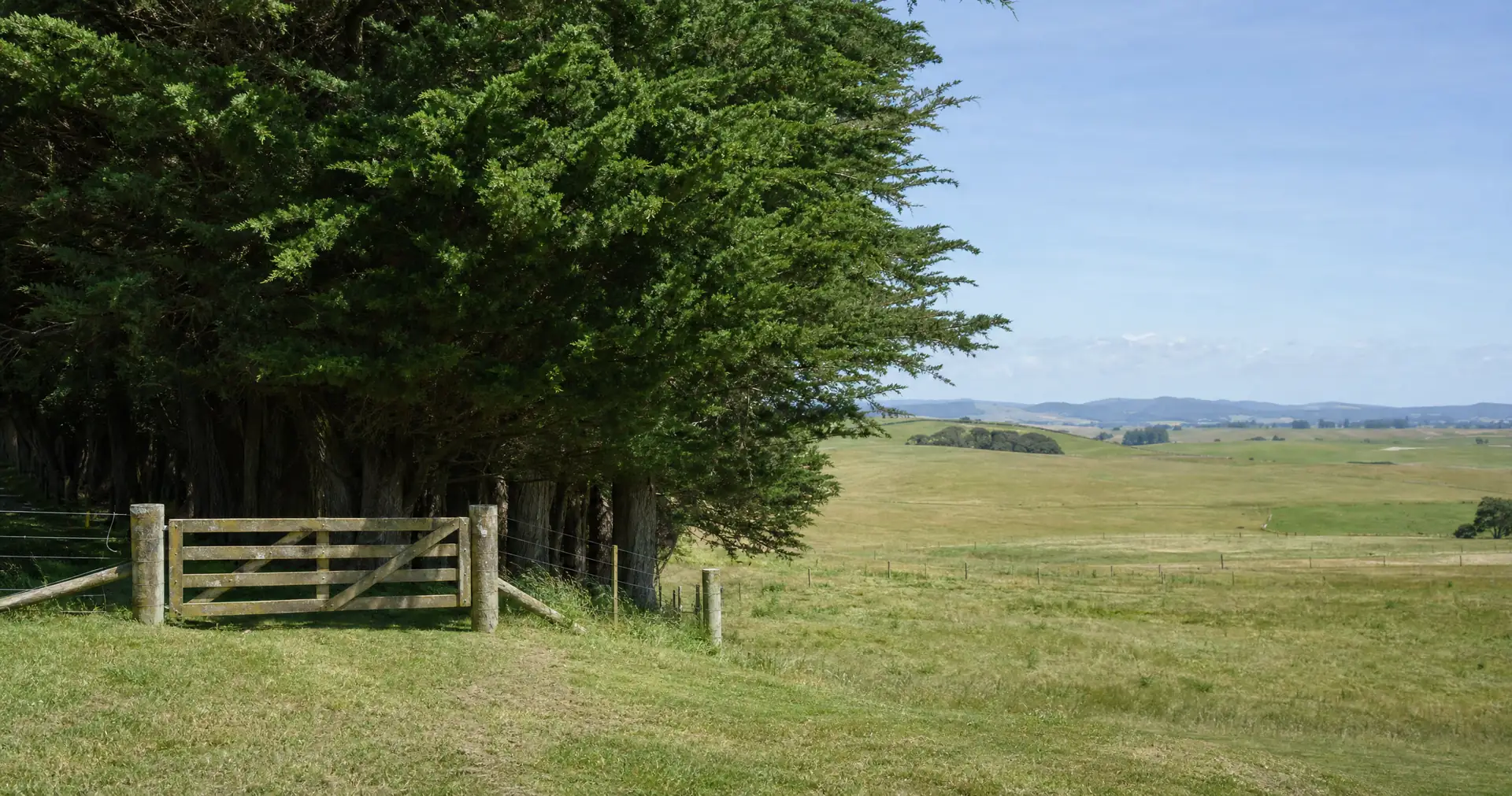
Term debt secured on the land is the largest and longest commitment a farming business carries, and the structure of it decides how much room the rest of the operation has.
Last reviewed 8 September 2026
Indicative repayment
Weekly
$2,340/week
Indicative only. Not a quote or offer of credit. Actual rates, fees, and repayments depend on the business profile and the lender's decision.
Sending to Prospa
5 years at 8.00% . Prospa will ask a few quick questions, then provide a firm quote and funding if eligible.
Redirecting…
The short version
The structure
The amount is sized against the value of the land and the equity the business holds in it, and against what the operation can service from its production. Those two constraints bind at different times, and a facility comfortable on equity can be uncomfortable on servicing in a poor season.
The term is long, and it is ordinarily subject to periodic review rather than fixed for its whole life. That distinction matters, because the loan may run for twenty-five years while the lender reassesses the arrangement every few years within it, on terms set out in the agreement.
The rate is fixed, floating or split between the two. Fixing part of the debt provides certainty on the portion fixed and removes flexibility on it, and break costs on a fixed portion repaid early can be substantial. A split is the ordinary compromise and the proportions are worth deciding rather than defaulting.
Amortisation is the fourth and the one businesses think about least. A facility repaying principal reduces every year, and one on interest only does not, and the difference across a decade is the difference between a business that owns more of its land and one that owns the same amount of it.
Amount
Against land value and equity
Term
Long, and reviewed
Rate
Fixed, floating or split
Amortisation
Principal, or interest only
Worked example
A farm carries $2m of term debt at an indicative 8%. On interest only, the annual cost is $160,000 and the balance in ten years is $2m. On a twenty-five year table structure, the annual cost is roughly $185,000 and the balance in ten years is around $1.6m.
The difference in annual outgoing is about $25,000, which in a tight year is a real amount and is frequently the reason interest-only is chosen. The difference in position after ten years is about $400,000 of debt repaid, which is a different kind of number entirely.
Neither is wrong. Interest only during a development phase, where the spending is producing future income, is a sensible use of the structure. Interest only as a permanent arrangement is a business that has stopped repaying its land, and the ten-year figure is what makes that visible.
Illustrative figures
Illustrative on stated assumptions and rounded. Not a quote or offer of credit.
What a lender assesses
A general description rather than any lender’s criteria, which are their own and vary considerably.
01
The proportion of the property value the business owns outright. It sets the ceiling on what can be borrowed and it is the first number a rural lender looks at.
02
What the farm has actually produced across several seasons, not a single strong one. Rural lenders read a run of years because the variation between them is the point.
03
Whether the operation covers the repayments from what it earns, tested against a conservative payout or price rather than a recent good one.
04
Experience, management practice and succession position. This carries more weight in rural lending than in most sectors, because the same land in different hands produces different results.
05
Consents, nutrient limits and compliance obligations affect what the land can produce and therefore what it can service. Lenders assess them as part of the value rather than separately.
The structure decision that matters most
A farm receiving most of its income in a few months and repaying its term debt in twelve equal instalments is funding the off-season out of a facility or out of reserves. Rural lenders understand this and will frequently structure repayments seasonally, with larger amounts in the months income arrives and smaller ones between. That has to be asked for, because a standard schedule is the default, and the difference it makes to a farm’s year is considerably larger than a small movement in the rate.
Rate structure
A decision most farms make once and revisit rarely, and one where the right answer depends on the position rather than on a view about rates.
| Feature | Fixed | Floating | Split |
|---|---|---|---|
| Certainty of cost | High for the fixed period | None | Partial |
| Ability to repay early | Break costs may apply | Ordinarily free | On the floating portion |
| Benefit if rates fall | None until it rolls | Immediate | Partial |
| Exposure if rates rise | None until it rolls | Immediate | Partial |
| Suits | A tight servicing position | A business with surplus cash | Most farms |
Where servicing is tight, certainty is worth more than optionality and a larger fixed proportion follows. Where the business regularly has surplus to apply, floating preserves the ability to use it without break costs.
The process
Generalised rather than specific to any lender. This is the heaviest application on the site.
01
Several years of financial statements, production records, a budget for the coming season and a cash-flow forecast. Rural lenders read a run of seasons rather than one, and presenting the variation rather than the best year is more credible.
Documents commonly required
02
A registered valuation of the property on a basis the lender accepts, which for rural land takes longer than a residential valuation and is more expensive. Starting it early is the largest single influence on the timeline.
Documents commonly required
03
The amount, term, rate structure, amortisation and the repayment timing. This is negotiated rather than offered, and the repayment timing is the part most worth attention.
04
A mortgage over the land, ordinarily with a general security agreement over the business as well. Where livestock or plant carries separate finance, the priority arrangement between lenders has to be resolved.
Documents commonly required
No timings appear here. Rural refinancing takes longer than most business lending because of the valuation and the volume of information, and a lender will state its own expectation.
When it tightens
Production or price falls and the repayment schedule does not. The business meets it from reserves, from a seasonal facility or not at all.
What happens:Pressure that compounds if the following season is also poor, which in farming is a realistic rather than a remote scenario.
A periodic review conducted after a difficult period results in tighter terms, a requirement to reduce debt, or a demand for additional security.
What happens:A structural change arriving from the lender rather than from the farm, on terms set out in the agreement.
Where a facility is in default, New Zealand law requires a lender to offer mediation under the Farm Debt Mediation Scheme before taking enforcement action against farm property.
What happens:A statutory process with a defined shape, which is covered in its own guide and is a genuine protection rather than a formality.
The third of these is specific to farming and is worth knowing before it is needed. The Farm Debt Mediation Scheme obliges a lender to offer mediation before enforcing against farm property, and the guide on this site sets out what that involves.
The honest position
The core facility is frequently the arrangement least examined on a farm, because it is large, it was set up years ago and changing it involves valuations and legal work. That inertia is expensive when the structure no longer matches the business.
The questions worth asking every few years are whether the repayment timing still matches the production year, whether the fixed and floating proportions still suit the servicing position, and whether the amortisation reflects what the business intends. All three change as a farm develops and none of them changes on its own.
None of that is a suggestion to refinance frequently, which carries real cost. It is a suggestion to review deliberately, with the accountant and the lender, on a cycle rather than in response to a difficulty.
Refinancing
Moving term debt between lenders is a larger exercise than in most sectors. A new valuation, full legal work on the security, a fresh assessment of several years of production and the resolution of any other security positions all sit in it, and the costs are substantial enough to be part of the decision rather than an afterthought.
That means refinancing is worth doing for structure more often than for rate. A facility whose repayment timing no longer matches the production year, or whose term no longer matches the assets it funded, is worth restructuring even where the rate is fine. A facility that is well structured and slightly expensive frequently is not.
The other consideration is the relationship. A rural lender that has held a farm through a difficult season knows the business, and that knowledge is worth something at the next difficult season. Moving for a small margin and losing it is a trade worth making deliberately rather than by default.
The trade
The repayment
The calculator runs the ordinary amortising arithmetic. Rural term debt is frequently larger and longer than the ranges here, so treat this as the shape rather than the scale. Indicative only, and not a quote or offer of credit.
Indicative repayment
Weekly
$2,340/week
Indicative only. Not a quote or offer of credit. Actual rates, fees, and repayments depend on the business profile and the lender's decision.
Sending to Prospa
5 years at 8.00% . Prospa will ask a few quick questions, then provide a firm quote and funding if eligible.
Redirecting…
References
The published source for New Zealand rural lending aggregates and rate context.
The statute requiring mediation to be offered before enforcement against farm property.
The agency responsible for the Farm Debt Mediation Scheme and for rural sector policy.
Backs the description of security over livestock and plant alongside a land mortgage.
Backs the distinction between general information of this kind and regulated financial advice.
FAQ
Ordinarily a mortgage over the land, frequently alongside a general security agreement over the business. That security is what produces the lowest rate available to a farming business and the largest consequence if the facility fails.
Long, commonly measured in decades, and ordinarily subject to periodic review within that period. The loan running for twenty-five years and the lender reassessing the arrangement every few years are two different things and both are normal.
On a farm with concentrated income, frequently yes, and it has to be asked for because an even schedule is the default. Matching repayments to when income arrives makes more difference to a farm’s year than a small movement in the rate.
It is a tool during a development phase, where spending is producing future income. It becomes a signal when it persists, because the business is not reducing its debt and the position after a decade is unchanged.
It depends on the servicing position rather than on a view about rates. A tight position values certainty and favours a larger fixed proportion; a business with regular surplus values the ability to apply it without break costs and favours floating.
A charge that can apply where a fixed portion is repaid or restructured before its term ends, reflecting the lender’s cost of the fixed funding. They can be substantial and they are the reason fixing removes flexibility as well as risk.
Equity in the land, production history across several seasons, servicing tested against conservative prices, the operator’s experience and management, and the environmental and regulatory position of the property.
Because the same land in different hands produces different results, and rural lenders have long experience of that. Management practice, succession position and experience carry more weight here than in most other lending.
Longer than most business lending, largely because of the valuation and the volume of information involved. This site does not publish timings, and a lender will state its own.
A statutory scheme requiring a lender to offer mediation before taking enforcement action against farm property. It is a genuine protection with a defined process, and it has its own guide on this site.
Deliberately, on a cycle rather than in response to difficulty. Whether the repayment timing still matches the production year, whether the fixed proportion still suits the position, and whether the amortisation reflects what the business intends all change over time.
No. It describes how a facility works in general terms. This site is not a lender, a broker or a registered financial adviser, and what suits a particular farming business depends on facts a website cannot see.
Related
Rural property finance
Where the term debt usually starts.
Read onSeasonal finance
The facility that carries the year between payments.
Read onHow NZ rural lending works
Who lends, and how a farm file is read.
Read onThe Farm Debt Mediation Scheme
What the statute requires before enforcement.
Read onAll eight kinds of finance
Every rural facility compared in the same shape.
Read onDisclaimer
Farm debt is serviced out of a production year that does not arrive evenly, and it is commonly secured on the land and the stock the business depends on. Modelling the cost against the season before committing is what this site is built for. Borrowing at a level that stays comfortable through a poor season, rather than only through an average one, is widely regarded as the safer frame.
What this site is
A calculator and information tool. Not a lender, not a broker, not a registered financial adviser. Nothing here is personalised financial advice.
What the figures show
Modelled estimates based on the inputs shown. Not a quote. Not an offer of credit. Not a guarantee of approval, rate or fees.
What the lender decides
Final rates, fees, and approval are set by the lender after a CCCFA-appropriate assessment of the applicant's circumstances and credit decision.
Commercial disclosure
Farmfinance.org.nz earns a commission from Prospa when a visitor applies through this site and their application is approved. The commission is paid by Prospa, not by the borrower, and it does not influence the rate Prospa offers. Full disclosure on the partner page.
Tax, GST, and accountant framing
Tax-treatment statements (GST claim timing, interest deductibility, depreciation rates) are general in nature and subject to the accountant's confirmation on the specific business position. For material amounts, professional advice from a registered financial adviser or chartered accountant is widely regarded as the safer frame.